It was difficult to know where to begin with this post, because I want to talk about reframing one's worries and setbacks...but how do you do that without talking about the worries and setbacks? I'm fairly sure no one wants to read a confessional outpouring of complaints, hand-wringing, and existential crises. So, I'll preface this post by saying it's a positive one! Nearly nine whole months since Stone and Flesh was published, it's on the cusp of some awesome milestones – and as always, I try to take the time to reflect on what has worked out, and what could be done differently for Book 2.
Inward versus Outward
First, it should be said that when evaluating any project that's close to the heart, the evaluation is as much an internal reflection as it is an external data analysis. When something's a product of your imagination and you sink so much time into it (even beyond the actual creation of the thing), it's hard to then apply a dispassionate lens when it comes time to check what's working and what's not. It's hard not to judge yourself when you judge the thing you've made.
I love my book. I love most of the choices I've made to bring it to life. I love who it's reaching, and where it's going.
I do not love how long it took me to undertake this journey. I do not love how some aspects of the journey have made me think about myself or others.
At the confluence of the good and the bad, it's been hard to separate what's truly a reflection of me as a person and what's a consequence of business choices, the structure of the industry, or sheer bad luck. We talk about imposter syndrome a lot in the community but rarely do we drill down into the toll the labor of disentangling fiction from reality takes on you while you're trying to manage everything else. And like any self-work, the process is rarely linear or quick. The smallest thing can make you feel the full satisfaction of achieving your dream, then the next day you can have one of the lowest moments of your life.
Recently, I realized that I'd begun to think of Stone and Flesh as 'the Apology Book'. I was tickled by the number of times folks opened conversations with me with apologies related to my book. For not reading it, for not being much of a reader, for not reading quickly enough, for being delayed on feedback, etc. etc. – things that are perfectly understandable and do not bother me! At first it was tongue-in-cheek, but as time went on, bitterness tried to creep in. Not because I was frustrated with other people, but because I found myself apologizing for my book, either when introducing it or internally. I was, somehow, after all my deliberate choices and in spite of my love for them, apologizing for its length, its subject matter, and seemingly dozens of other things. Why?
Because I was worried about it not being liked. Yet...I'm comfortable with Stone and Flesh not being liked. It happens. That's the joy of reading. So, again, why?
Because I was worried about not being liked. About not being accepted. About who I am as a person being summarily and irrevocably judged on a debut. Because I've poured so much effort into this book, and because it represents the culmination of a far longer period of mental, emotional, creative, and professional struggle, small moments of doubt run the risk of amplification into something much larger and more chronic. The ongoing process of tempering that and learning to manage my perspective is one of the greatest life lessons I think I'll learn.
All that to say: it's been tough, I'm still trying, and I hope that in writing this I can reassure others!
Stone and Flesh's Hurdles, a.k.a. Opportunities
I'd venture to say that all authors, no matter their publishing path, are expected to want the same things: rapid popularity, social and professional accolades, and money. These assumed aspirations form the criteria against which we're judged and, no matter how strong our willpower, we can be tempted to judge ourselves. Certain benchmarks are standard, yes – like earning back what you've invested in publishing your book – but others that should be optional are often framed as non-negotiable. If you don't meet those benchmarks, it can contribute to feelings of failure before you're even fully out of the gate.
There are some things that I largely knew going in would be hurdles for Stone and Flesh. It's important to note, though, that 'hurdle' is something of a sliding scale. No matter the benchmarks thrown at us, ultimately reading and the pursuit of publishing – and happiness – remains subjective, and on this fact alone I've been able to remind myself that where my book may fall short for one person, it'll soar for another.
Length
It's long, at ~600 pages all-inclusive. There's definitely a solid fanbase for chunky doorstoppers, but readers understandably wonder if the length is justified. It also takes up time that two or even three books could fill, which matters to folks determined to get through a certain number of books a year.
Worldbuilding
I believe it's hard to care about the fate of a world if you don't have a clear picture of it, and that it's hard for a character to be relatable if they don't seem to be a product of or respond to the world around them. This means I include details that are more for atmosphere than moving the plot forward. That doesn't float some folks' boats!
Plot Complexity
I have an overall plot and several sub-plots that serve it, all going at once. Some readers like a trimmer plot selection.
Large Cast of Characters, Multiple Points of View
While I have a primary protagonist, there are actually several main protagonists that have their own narrative POVs. There are also secondary characters and antagonists with narrative POVs, depending on what I felt the needs of the story were. They're also in third-person. Some readers prefer a single, first-person POV rather than jumping around.
In general, I have a lot of named characters. Some are just in passing, for flavor, and some crop up more frequently. Some readers would rather only significant characters be named.
Prose Style
My prose trends toward lyrical rather than commercial and, where appropriate, takes its time to stop and smell the flowers.
Series versus Standalone
Some readers can be leery about starting a series that's unfinished. (Looking at you, GRRM and Rothfuss.)
Comparative Titles
Because there's a lot going on in this book, it's hard to summarize it by pointing to one or two other books in the genre. Pointing at other media can sometimes help, but true market positioning doesn't allow for much nuance. I also don't like pointing at books I haven't read.
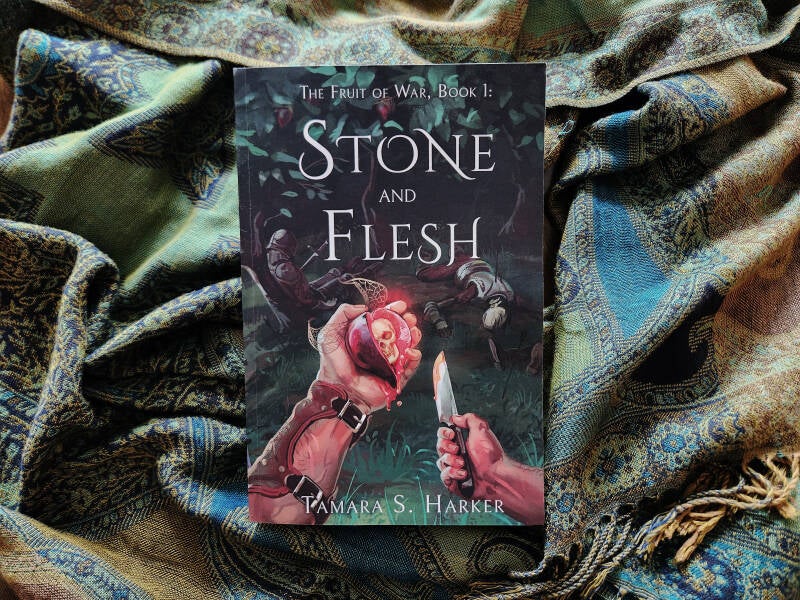
Atypical Fantasy Cover
I wanted something more minimalist that still gave genre cues; while I like a good fantasy cover featuring a character or two, I also didn't want to immediately prescribe what mine look like.
Lack of Popular Tropes
No shadow-daddies, enemies-to-lovers, or dragon riders here. Some readers won't even read a book's blurb if its marketing tropes don't tick certain boxes.
The takeaway?
All of the above are one person's trash pile and another person's goldmine. I need to remember that I'm not trying to appeal to everyone, and never was. In fact, the person I need to satisfy most is myself, because if I can't be passionate about my own book, what's the point? So, from this I can conclude I'm looking for folks who want something off the beaten path, something immersive, something complex.
What I'll Try to Do Differently
Having this reflective period is pretty useless without applying it to the future. Although common wisdom is that the biggest seller of your book is the next one, it's also true that it's harder to build readership for that second book. There's certain things I need to do to give Book 2 a better shot.
First, I need to read more. (I've always known this.) Not only is it good for the craft, and not only do I want to support my community (trad or indie), but it will help me realize I'm not as alone as I think. I also want to continue engaging with my community to make up for lost time, as I feel that being a newcomer to it hurt Stone and Flesh's chances back in March. A lot of that will involve creeping out of my comfort zone and taking more chances, but also being more forgiving of myself and learning to make certain restrictions work for me.
There are also certain things I need to make greater effort to remember:
- I'm laying the groundwork for something far bigger, and what appears to be a problem now will actually serve it well in the future.
- Considering how little I started with – budget, ramp-up time, audience – and how little I've been able to sink into marketing, I've done pretty well for a debut, trad or indie. Nearly one hundred sales in its first nine months is pretty good!
- Comparison and perfectionism are the thieves of joy and progress.
Most of all, I need to stop apologizing. I'd gotten into the habit in my personal life of changing apologies to gratitude where appropriate, but it's time I started applying that to one of the things I care about most deeply.

Add comment
Comments