Stone and Flesh was always going to be a darker flavor of epic fantasy. It's what I like, what can I say? Yet I was always reluctant to ascribe it the 'horror' or 'gothic horror' subgenre label. It took sitting back and considering the true definition of gothic literature for me to feel confident in my interpretation, because yes, Stone and Flesh has subtle – and not so subtle – gothic and gothic horror themes, and its sequel is going to get darker still.
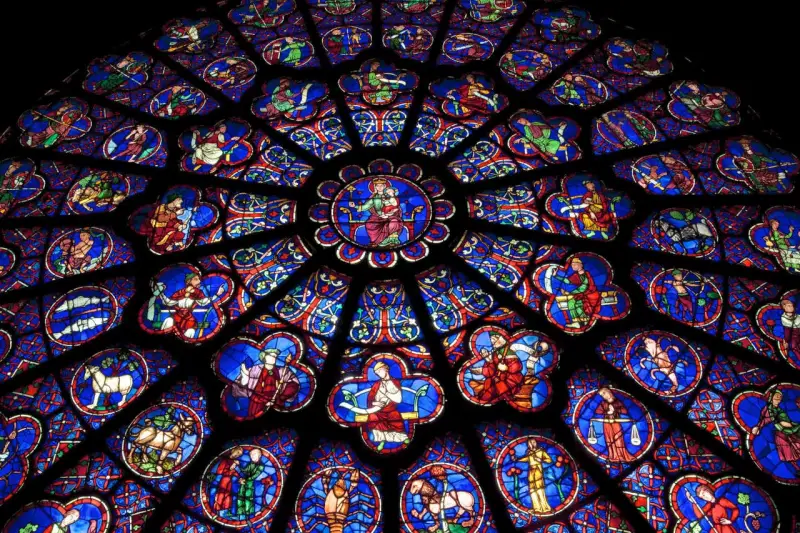
Photo of north rose window of Notre-Dame found here.
What is Gothic Literature?
Merriam-Webster defines Gothic fiction specifically in the adjective sense as "of or relating to a style of fiction that describes remote settings and mysterious or violent incidents"; the Wikipedia article for the same gives it the alternative name of 'gothic horror' and describes it as a "literary aesthetic of fear and haunting". The term 'Gothic' itself was originally pejorative and referred to Gothic art and architecture – such as the infamous example of the style, Notre-Dame de Paris – and in turn the Goths, who were perceived as barbaric. Nowadays it has a certain loose association with medieval romanticism or the Victorian period, as well.
As a genre, it began to take hold in the later half of the eighteenth century and continued (at strength) into the nineteenth, remaining influential thereafter. It was arguably a response to the European Age of Enlightenment and, once it hit its stride, was determined to challenge commonly-held assumptions about morality; to that end, works of Gothic literature were also called 'gothic romances', due to the influence of Romanticism in the late eighteenth century. You're likely already familiar with some notables even if they're not your thing: Mary Shelley and Frankenstein, the works of Edgar Allan Poe, Bram Stoker and Dracula, and the oeuvre of Anne Rice, to name but a few.
"It was a dark and stormy night..."
In giving those examples alongside the definition, you can probably guess its common characteristics:
- that selfsame Gothic architecture loaned to its settings in the form of castles, ruins, monasteries, and necropolises
- the conflict between good and evil, often with religious or supernatural overtones
- corruption in all its forms (even to the point of classicism) and subversion of social norms, including sexuality
- the drama, cruelty, and violence of nature
- mysteries, frequently occult or dangerous in nature
- otherworldly entities, including ghosts, demons, and monsters
- death, dreams, curses, possession, altered reality, and the past encroaching on the present
- feelings of unease, isolation, rapture, guilt, insanity, awe, terror, and liberation
Anything that looks into the shadows – of the mansion's library, or of the human psyche.
We could be here for days dissecting the "why" of the cultural movement behind the popularity of Gothic fiction, including why it's had something of a resurgence in today's climate. That's not in the scope of this blog entry. Suffice it to say that it's set to endure for generations to come, as long as there are human beings who want to peek behind the curtain or analyze a dream.
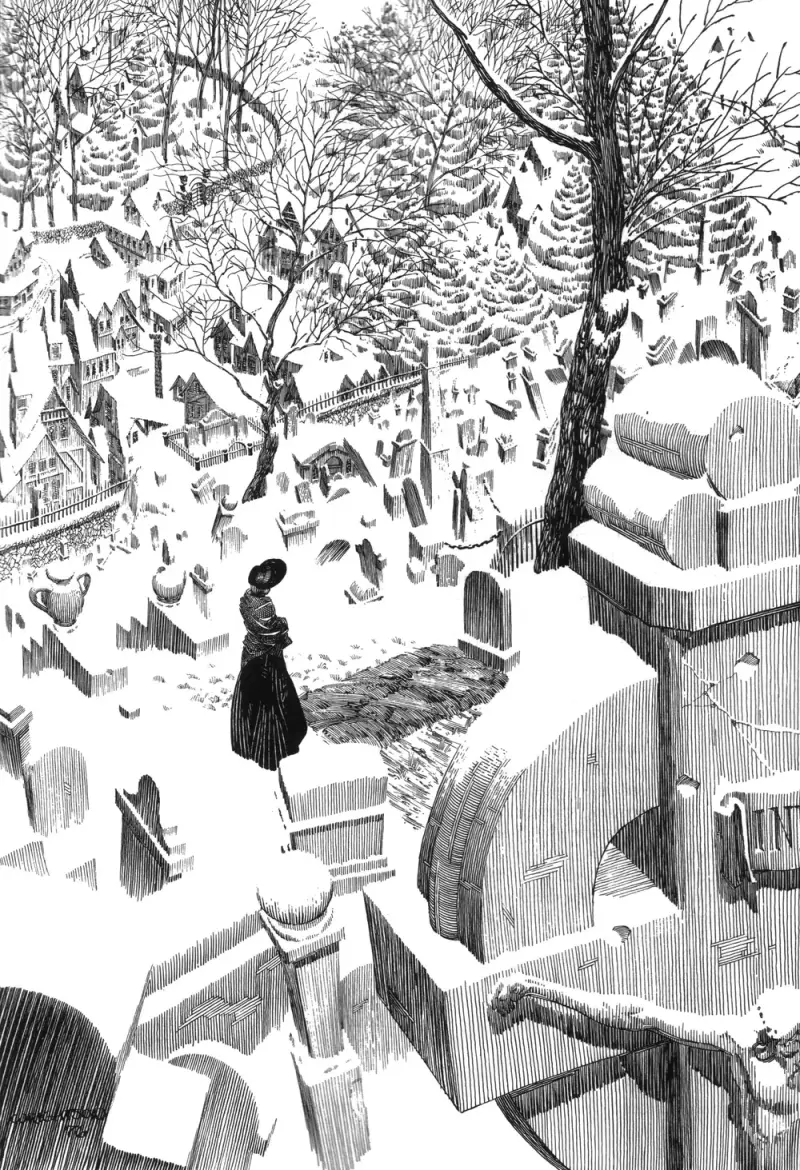
Illustration for Frankenstein by Bernie Wrightson, found here.
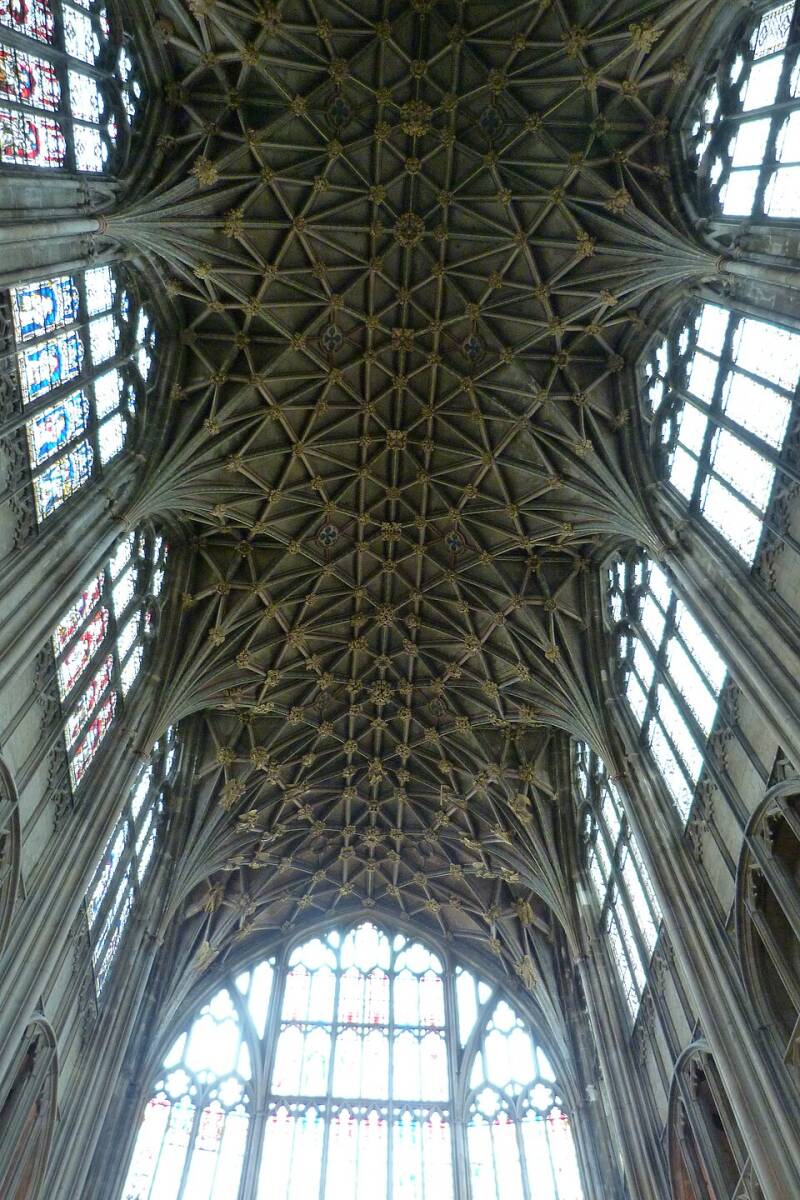
Lierne vaults of Gloucester Cathedral, found here.
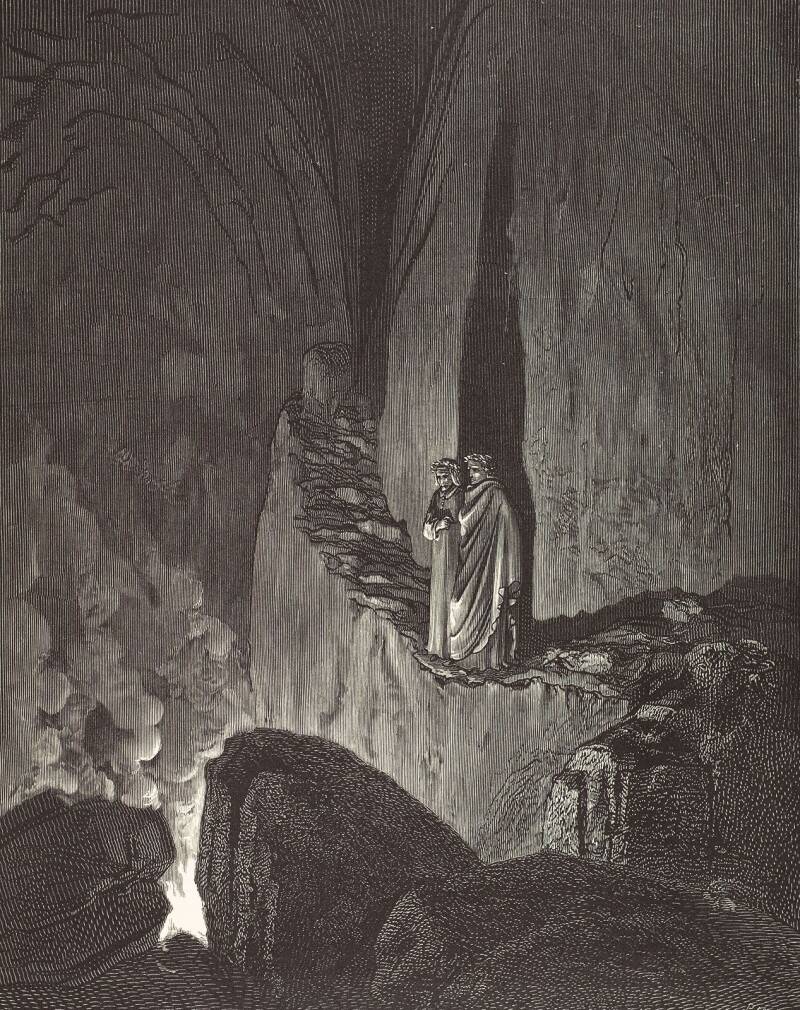
Illustration for The Inferno by Gustave Dore, found here.
Themes and Influences in Stone and Flesh
Stone and Flesh isn't set in a ruined castle in a land of perpetual darkness. It has no damsel in distress fleeing through a forest in a sweeping nightgown. There is no fallen angel love interest, or vampire coven, or lightning cracking over a storm-scoured seaside cliff. The apocalypse isn't nigh.
Here's what it does have:
- Psychopomps, in the form of Shepherds of Leaving: an entire profession of people tasked to commune with and escort the spirits of the dead into the 'afterlife'; we practically begin the story with a death and a funeral.
- Fear: of a plague returning, of war beginning again, of famine, of death.
- Otherworldly, demonic entities, in the form of the Azgorach: some of whom can 'possess' and control others through advanced psychic and biological abilities.
- Dark magic, in the form of warlocks: a corrupt caste often arising from 'good' magic-users, who like to experiment on others and conduct necromancy and summoning rituals, and who are ostracized from society.
- Ruin both physical and metaphorical: towns and cities abandoned or destroyed; entire family lines wiped out; ravaged landscapes; characters with wounds and scars, afflictions, or PTSD.
- A significant artifact with the power for bounty or destruction, considered a curse by many.
- Characters haunted by the past, both at large and their own, and faced with harrowing choices.
- Frequent juxtaposition of the beautiful and the grotesque, growth and decay.
- A rising feeling of dread and the questioning of reality and memory as the plot unfolds.
Even as a child my interests and early influences have always been very firmly Gothic, from the architecture and art and the associated historical periods through to the literature. Growing up in southern Louisiana, ghosts, the legacy of human suffering, and the push and pull of the taboo versus decorum were never far away; my parents' Halloween parties are still talked about some thirty years later. My favorite Disney movie was The Hunchback of Notre-Dame; I devoured reference books on the occult, mythology, and herbalism. When I became a teenager in England, I will happily cringe and admit that I became something of a product of the Goth subculture. Though I didn't regularly go round in pale foundation and a dark lip, or even constantly dress in black, I developed a taste for symphonic rock and dramatic classical composers like Wagner; I loved our weekend trips to National Trust castles and ruined monasteries. My circumstances during that time led me easily and unsurprisingly to an appreciation for poetry, which I wrote for a long while and allowed to influence my prose.
Though my initial prose themes tended to be a little melodramatic when I was young, they've endured and matured: in true Gothic fashion, I like exploring extremes of emotion, all kinds of juxtapositions, and the nature of man. I go crazy for symbolism. I'm not shy about blood and gore or sexual themes, where appropriate. Something or someone will be windswept at some point. There will probably be a dream sequence or three. I find tragic characters compelling, not just for their tragedy but what they do in the aftermath of those tragedies. I like playing with assumptions: for example, when I explore how comfort can be dangerous, or that death need not be feared. I love describing something terrible as if it were sublime.
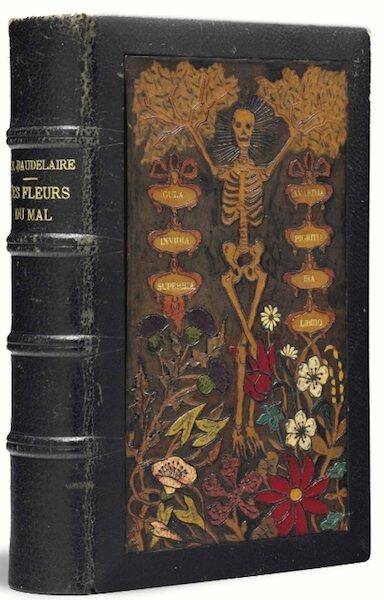
1857 binding for Les Fleurs du Mal, found here.
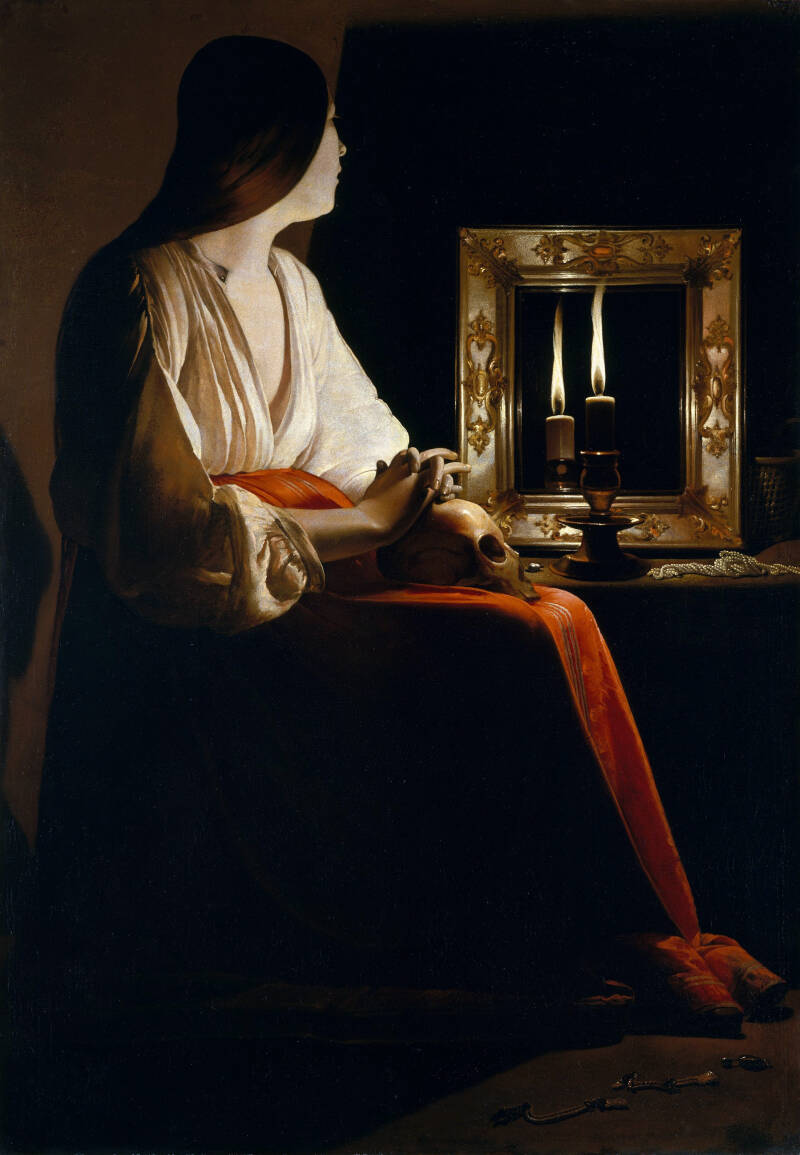
The Penitent Magdalene by Georges de La Tour, found here.
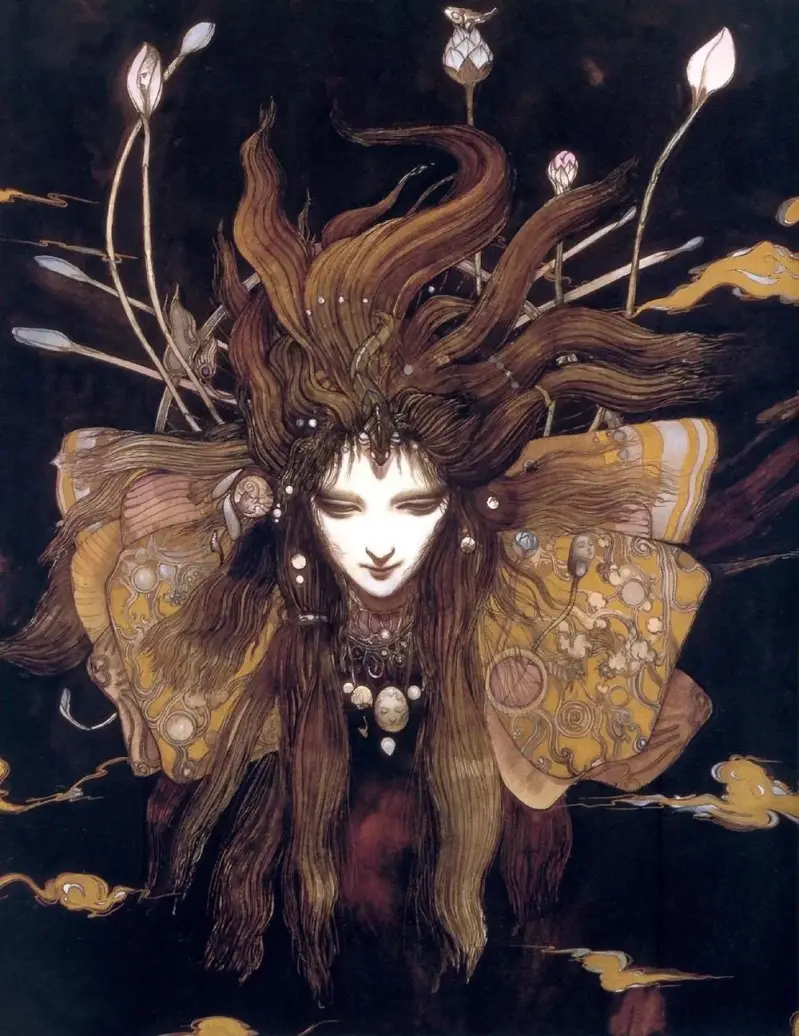
Art by Yoshitaka Amano, found here.
I've been more reluctant to point to 'other media influences' for Stone and Flesh, for two reasons. Firstly, because my influences are rather piecemeal; if you ask me what my favorite bands or albums are, it's hard for me to respond because I grow attached to individual songs instead. Similarly, I may be inspired by one particular scene in a film or one character (or dynamic) in a novel, rather than the whole film or the whole novel. It's hard to be succinct about that.
Secondly, because they're often too nebulous for me to cite. I think the kids call that 'vibes'. But again, it's hard to be succinct when you want to point to how one particular aspect of a piece of media made you feel rather than a handful of comp titles. That said, I think in some of my influences you can see something of the Gothic and in turn, something of the Fruit of War Saga: The Book of All Hours duology by Hal Duncan, Berserk, the Time Quintet by Madeleine L'Engle, Arthuriana and European fairytales, mythology, The King in Yellow, psychopomp and "Death and the Maiden" narratives, Bleach, works of chiaroscuro, Castlevania, Baudelaire's Les Fleurs du mal, Diablo IV and World of Warcraft, the prose style of du Maurier, the sculptures of Bernini, and the art of Yoshitaka Amano.
Most of all, though, it is a love of speculative fiction generally that inspires me. Asking "what if?", asking "why?", re-imagining the everyday, turning the expected on its head, or simply regarding something from a different point of view. The stuff of dreams. While there's an escapist element, yes, I think more often than not, SFF is instead a different lens through which to examine what makes us who we are.
It'll get darker, you say?
As I've mentioned to my newsletter subscribers, imagine Stone and Flesh is a lush meadow, and by its end you're approaching the treeline of a forest. Book 2 is when you step into that forest. Although part of me regrets not making Stone and Flesh weirder from the get-go, frankly, there was too much to establish first. I'm glad I decided to give readers a gentler, less dark entry into the Fruit of War Saga. However, I'm equally excited for the path to get twistier and the atmosphere thicker.
It's often said in this business that your second book makes or breaks you, if you're writing a series. I'm feeling the pressure, but also practically giddy for you to see the whole scope of my vision. If you haven't taken your first step on the journey yet, I hope this goes some small way toward convincing you.
The Fruit of War Saga is going to grow into something truly, amazingly Gothic: a dark and beautiful architecture framing an examination of human nature on an epic scale. I want it to haunt you for years to come in all the best of ways.
References
- 'Gothic' definition, adjective, third usage; Merriam-Webster [Accessed 5th May 2026]
- Gothic fiction; Wikipedia [Accessed 5th May 2026]
- What is Gothic literature?; Penguin [Accessed 5th May 2026]
- Romanticism; Wikipedia [Accessed 5th May 2026]
- Psychopomp; Wikipedia [Accessed 5th May 2026]
Further Reading
- What is a Gothic Novel? by Douglas Redant, for Owlcation.com
- The Enduring Appeal of the Gothic in Fiction by Rosemary Hennigan, for Writer's Digest
- Gothic fiction, entry in Artandpopularculture.com
Add comment
Comments